
- Home
- Service & Repair
- Track Replacement
Bent And Off-Track Doors · Oconomowoc, WI
Garage Door Track Replacement in Oconomowoc, WI
Garage door tracks guide every inch of your door's travel, and a small bend can turn into a jammed or crooked door fast. We repair and replace bent, rusted and misaligned tracks for Oconomowoc homes, put off-track doors back in service and set up tracks that fit your garage's ceiling height and layout.
- Same-day service
- Price before we start
- Safety-tested
- Call EarlySame-day visits
- UpfrontPrice before work
- LocalLake Country team
Track Basics
The Rails That Keep Your Door In Line
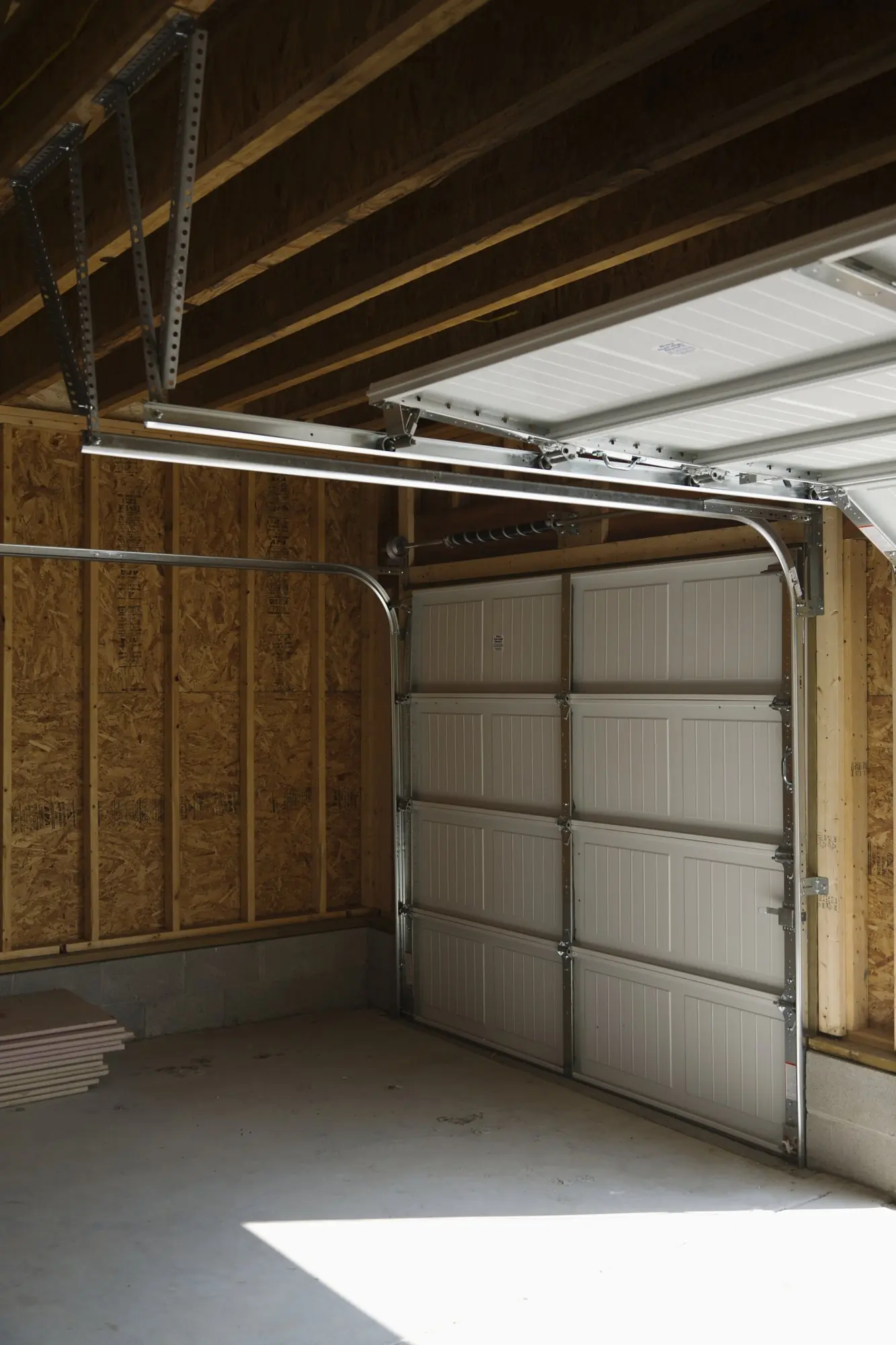
A sectional garage door rides in two sets of steel track, one on each side of the opening. Each set has a vertical piece that runs up the side of the door frame, a curved radius piece where the door turns, and a horizontal piece that runs back toward the ceiling and hangs from rear supports. The rollers ride inside a channel in the track, which keeps the door aligned as it lifts and lowers and holds it overhead when it is open.
The track does not carry the weight of the door. That is the springs' job. But the track decides where the door goes. If the two sides are not parallel, not plumb, or not the correct distance from the door, the rollers start to bind on one side and run loose on the other. The door may shake, rub on the weatherstrip, close crooked or stop partway. In more serious cases the rollers come out of the track entirely.
Tracks are held in place by a set of brackets. Jamb brackets attach the vertical track to the wood framing around the opening. Flag angles connect the vertical and horizontal pieces near the top. Rear hangers, usually made of perforated angle, suspend the back of the horizontal track from the ceiling joists. A bent track gets the attention, but loose or failing brackets are behind a large share of the track problems we see.
Bent And Damaged
How Tracks Get Bent And When To Replace Them
The most common cause of a bent track is impact. A car backing out before the door is fully open, a snowblower or lawn tractor clipping the vertical track, or a door hit while it is moving can all kink the steel. Even a small bend in the channel can catch a roller, and the door's momentum can make the damage worse each time it runs. Tracks also bend when an opener keeps pushing against a door that is already jammed.
Some damage can be repaired. A track that has shifted because a bracket loosened can often be reset and refastened. A minor ding in the flat face of the track, away from the roller channel, may not affect anything. But a kink in the channel, a crushed section, a track that has been forced open, or a piece that has been bent and straightened before usually needs to be replaced. Straightening steel weakens it, and a track that has been bent back tends to fail at the same spot.
Rust is the other reason we replace track. In an attached garage with good drainage this is rare, but in damp detached garages or garages where snowmelt sits along the walls, the bottom of the vertical track and the lower jamb brackets can rust badly. Rust at the bottom can let the track pull away from the wall. We check the fasteners and the wood behind them as well, since rotted jambs will not hold a new bracket.
- Kinked or crushed roller channel
- Track spread open or pinched closed
- Previously bent and straightened sections
- Rust weakening the lower vertical track
- Cracked or bent flag angles
- Loose, bent or missing rear hangers
- Stripped fasteners or rotted jamb wood
Off-Track Doors
What To Do When The Door Comes Off
A door that has come off its track is one of the more dangerous situations a homeowner can face with a garage door. The door may be hanging at an angle, partly open, with one side lower than the other. One cable may be slack while the other is still tight. In that state the door can shift or drop without warning, and trying to push it back into place by hand puts you right under hundreds of pounds of unsupported weight.
Our advice is simple. Stop using the door, unplug the opener so nobody presses the button, keep cars, kids and pets away from it and call us. Do not try to force the rollers back in, do not pull the emergency release on a crooked door, and do not touch the cables or springs. If a car is stuck inside, tell us when you call so we can plan for it. Calling early in the day gives us the best chance of reaching you the same day.
When we arrive, we secure the door first so it cannot move. Then we figure out why it came off. Common causes include a bent track, a broken or slipped cable, a failed roller, loose brackets or an opener that kept running against an obstruction. Putting the door back on track without fixing the cause just sets up the next failure, so we repair whatever let it happen before we call the job done.

What To Look For
Signs Of A Track Problem
Visible Bend Or Kink
Look along the inside of each track. A dent or kink in the channel where the rollers ride will catch the rollers every time the door passes, and the door's momentum can make the bend worse with each cycle.
Door Closes Crooked
If one side of the door touches the floor before the other, or the door leaves a wedge-shaped gap, the tracks may be out of alignment. Cable problems can cause the same symptom, so both should be checked.
Rollers Jumping Out
Rollers that pop out at the curve or ride shallow in the vertical track usually point to a track set too far from the door, a spread channel or loose brackets letting the track move under load.
Scraping Or Grinding Sounds
Metal on metal noise as the door moves can mean the rollers are rubbing the edge of a pinched track or that the door is dragging on part of the track. Left alone, it wears both the rollers and the track.
Loose Or Wobbling Track
Grab the vertical track and give it a gentle shake with the door closed. If it moves, the jamb brackets or fasteners may be loose or the wood behind them may be soft. Track that moves cannot hold alignment.
Sagging Horizontal Track
With the door open, look at the horizontal tracks overhead. A track that sags, hangs lower on one side or pulls away from a rear hanger can let the open door shift and should be fixed promptly.
Our Process
How We Handle Track Replacement
- 1
Secure And Assess
If the door is off track, we secure it before anything else. Then we inspect tracks, brackets, hangers, rollers and cables to find the actual cause of the problem, not just the visible damage.
- 2
Explain And Quote
We show you what is bent, loose or worn, explain whether it can be reset or needs replacing and give you a clear price before work starts. Framing issues or lift conversions are quoted separately.
- 3
Replace And Align
Damaged track sections and brackets are replaced and fastened into solid framing. We set the tracks plumb, parallel and at the correct distance from the door using a level and tape.
- 4
Run And Verify
We cycle the door by hand and with the opener, confirm the rollers ride properly through the curve, check balance and cable tension, and test the safety reversal before we leave.
Alignment
Getting The Track Square And Plumb
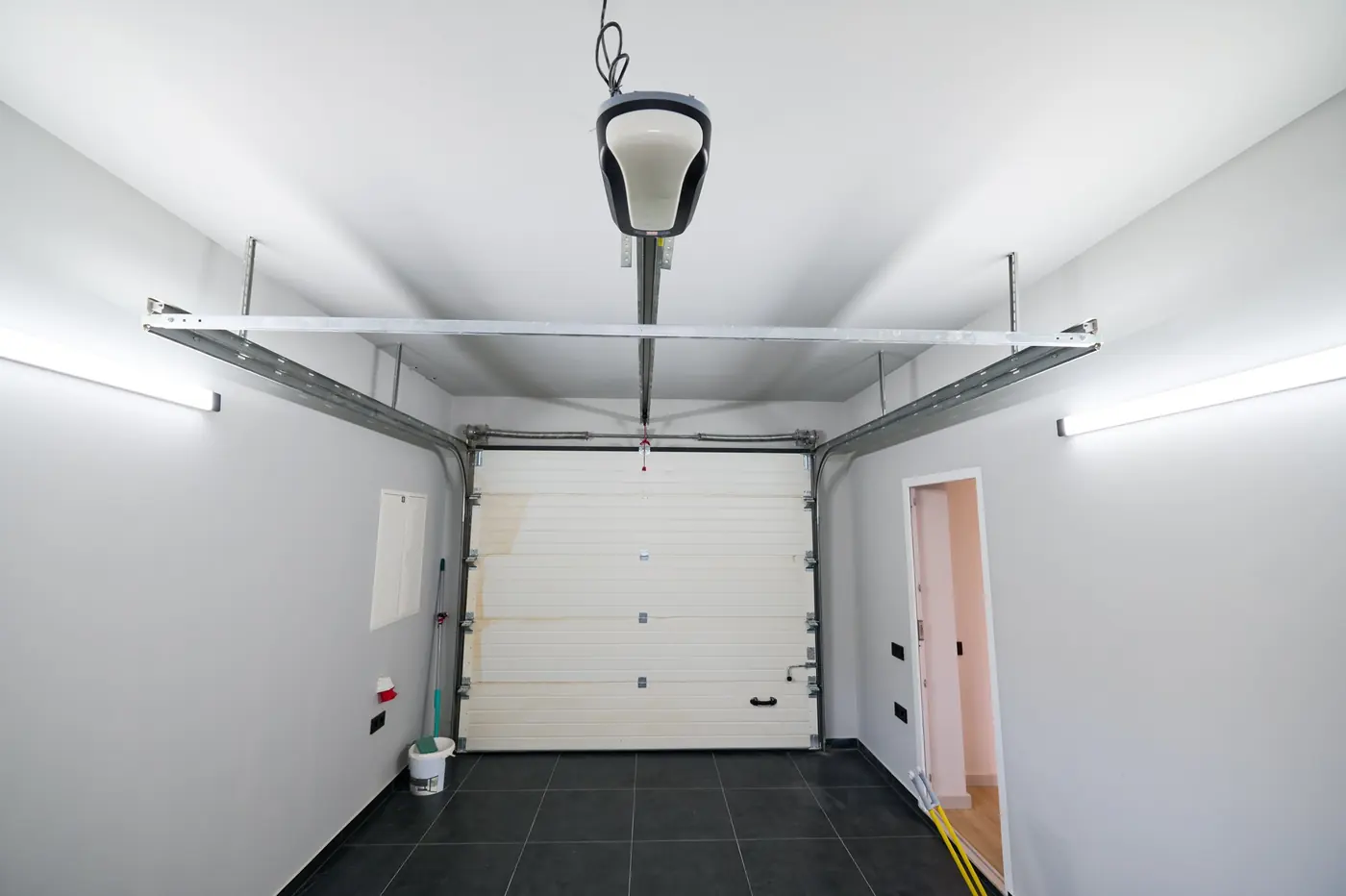
Track alignment is about a few measurements that have to work together. The vertical tracks need to be plumb so the door moves straight up and down. They need to be set the right distance from the door so the rollers sit deep enough in the channel without pinching. The horizontal tracks need to be parallel to each other and pitched very slightly upward toward the back, so the open door rests in place instead of trying to roll forward.
Small errors add up. A vertical track that leans out at the top lets the rollers ride shallow and pop out at the curve. A track that leans in pinches the rollers so they drag. Horizontal tracks that are not parallel make the door rack sideways as it opens, which strains hinges and can make the door twist when it closes. We check all of this with a level and tape, not by eye.
New track is fastened with the correct hardware into solid framing. On older garages we sometimes find that the wood jambs have shifted, settled or rotted, which makes proper alignment impossible until the framing is addressed. If that is the case we tell you before the work begins, explain what needs to happen and quote it so you can decide how to proceed.
Lift Types
Standard, Low-Headroom And High-Lift Tracks
Not every garage uses the same track layout. Standard-lift track is the most common and fits garages with enough room above the door for the curve and the springs. Low-headroom track uses a different curve design, sometimes with a second track rail, so the door can open in garages where there is very little space between the top of the opening and the ceiling. Many older detached garages and some converted spaces need low-headroom track to work at all.
High-lift track goes the other direction. The vertical track extends well above the top of the opening before curving back, so the door opens higher and sits closer to the ceiling. Homeowners choose high-lift setups for garages with tall ceilings when they want room for a car lift, overhead storage, or simply a clear, open garage. Vertical-lift track, where the door goes straight up without curving, is the extreme version and needs a lot of ceiling height.
Changing lift type is a bigger job than swapping a bent piece, because high-lift and low-headroom setups use different drums, cable lengths and sometimes different spring arrangements, and they affect how an opener mounts. If you are thinking about converting your track, we look at your ceiling height, door weight and opener situation, then explain what the conversion involves and quote it clearly before any work starts.

Local Know-How
Old Garages, Tall Doors And Oconomowoc Track Work
Track work in Oconomowoc covers a wide range of garages. Older detached garages behind lake cottages around Lac La Belle, Okauchee Lake and Oconomowoc Lake often have low ceilings, settled framing and damp floors, so low-headroom track and rusted lower brackets come up often. Historic downtown homes off Main Street and Wisconsin Avenue sometimes have garages built long before modern doors, with framing that needs attention before new track will hold. At the other end, newer homes at Pabst Farms tend to have tall doors and high ceilings, which makes high-lift track a popular upgrade. Winter adds its own hazard, since tight driveways, snowblowers and icy approaches lead to more bumped tracks between December and March.
Track Replacement FAQ
Questions About Track Replacement
Answers from the technicians who do this work across Oconomowoc every week.
Ask A Technician01Can a bent garage door track be straightened?
A track that has shifted because a bracket came loose can often be reset. A track with a kink or crush in the roller channel is a different matter. Bending steel back weakens it, and the same spot tends to fail again. In most cases with real channel damage, replacing that track section is the safer and longer lasting repair, and it is usually not a large job.
02My garage door came off the track. What should I do?
Stop using it right away. Unplug the opener, keep people and pets clear and do not try to push the door back into the track or pull the emergency release. A door that is off track can shift or fall without warning. Call us and we will secure the door, find out why it came off and fix the cause.
03Do I need to replace both tracks or just one?
Often only the damaged side needs new track. That said, the two sides have to match in style, gauge and radius, and on older doors the matching part may no longer be available. If the old track on the undamaged side is worn, rusted or a different style, replacing both can make more sense. We explain the trade-off before quoting.
04What is high-lift track and is it worth it?
High-lift track raises the door higher on the wall before it curves back, so the open door sits up near the ceiling. It is useful in garages with tall ceilings when you want space for a car lift, storage or more open room. The conversion involves track, drums, cables and often opener changes, so we look at your garage first and quote it clearly.
05Why does my garage door shake when it opens?
Shaking usually comes from worn rollers, loose hinges, misaligned or loose track, or an unbalanced door. Track problems tend to show up as shaking at a particular point, like the curve, or as rollers riding unevenly from side to side. We check the track, brackets, rollers and spring balance together so we can tell you which part is responsible.
06How long does track replacement take?
Replacing a bent section of track and a few brackets is often handled in a single visit. Full track replacement on both sides, framing repairs or a conversion to high-lift or low-headroom track takes longer and may require ordering parts. We give you a realistic idea of timing along with the quote, and same-day service is available when you call early.

Oconomowoc Garage Door
Door Off Track Or Crooked?
Call Oconomowoc Garage Door and stop using the door until we get there. We secure it, fix the cause, quote the price before work starts and offer same-day service when you call early.
More Services
Other Ways We Help Oconomowoc Homeowners
Drum Replacement
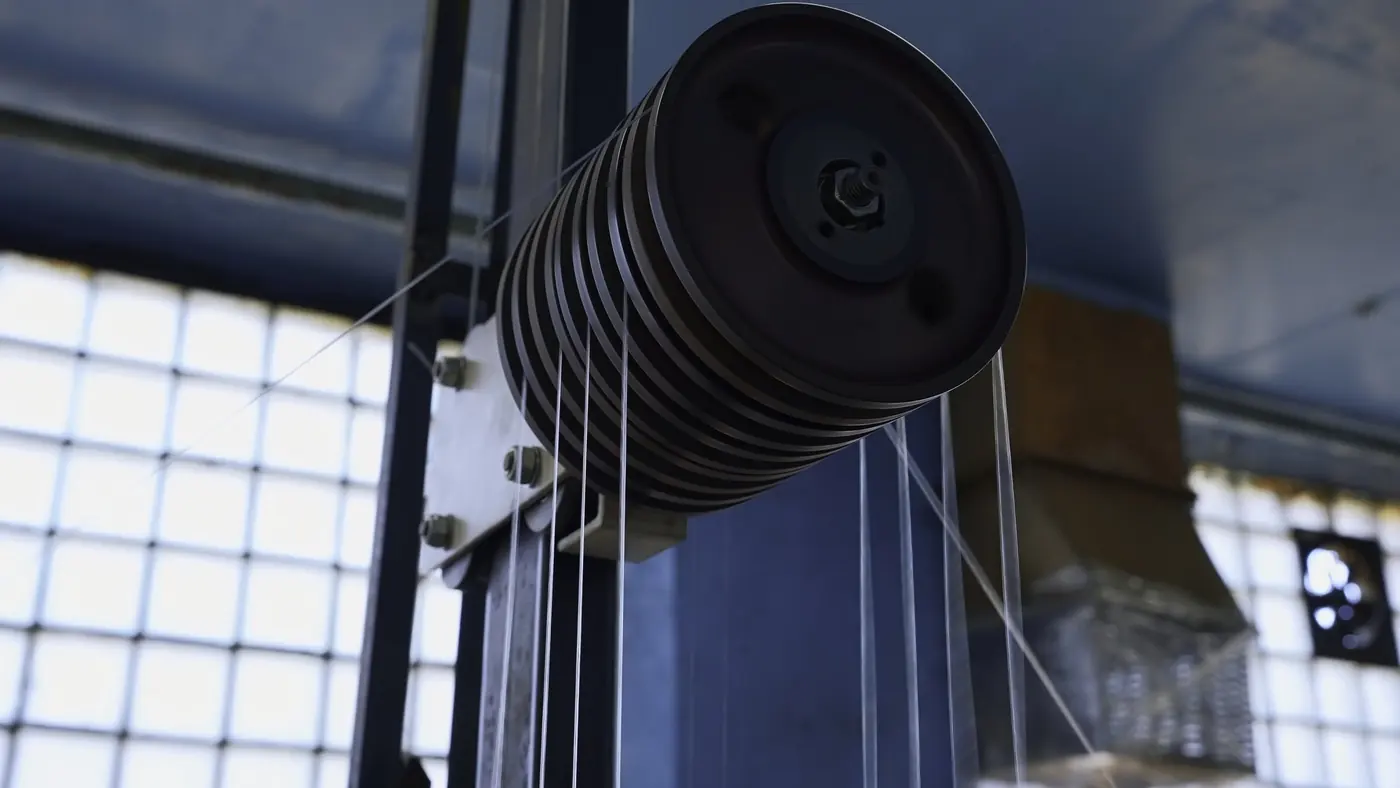
Worn cable drums swapped and set evenly so both sides of the door lift in balance.
Learn more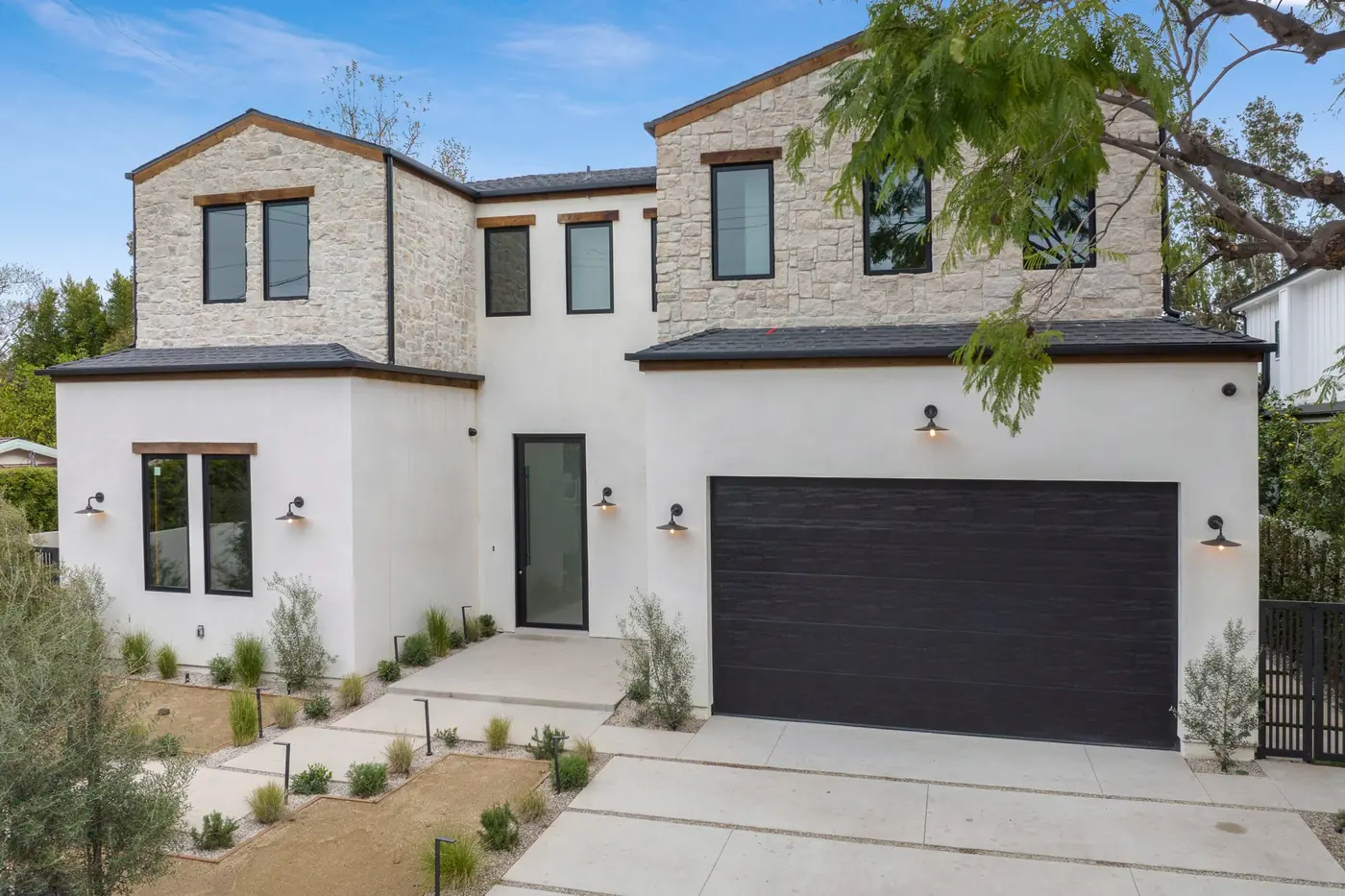
Garage Door Installation
New insulated doors measured, installed, sealed and balanced, with the old door hauled away.
Learn more
Garage Door Materials
Steel, wood, composite, aluminum and glass, with straight talk on what survives Wisconsin.
Learn more